【leetcode】274. H指数
本题的代码实测正确,但思路分析部分个人感觉还有点含糊,请谨慎查看思路分析部分。
题目内容
思路分析
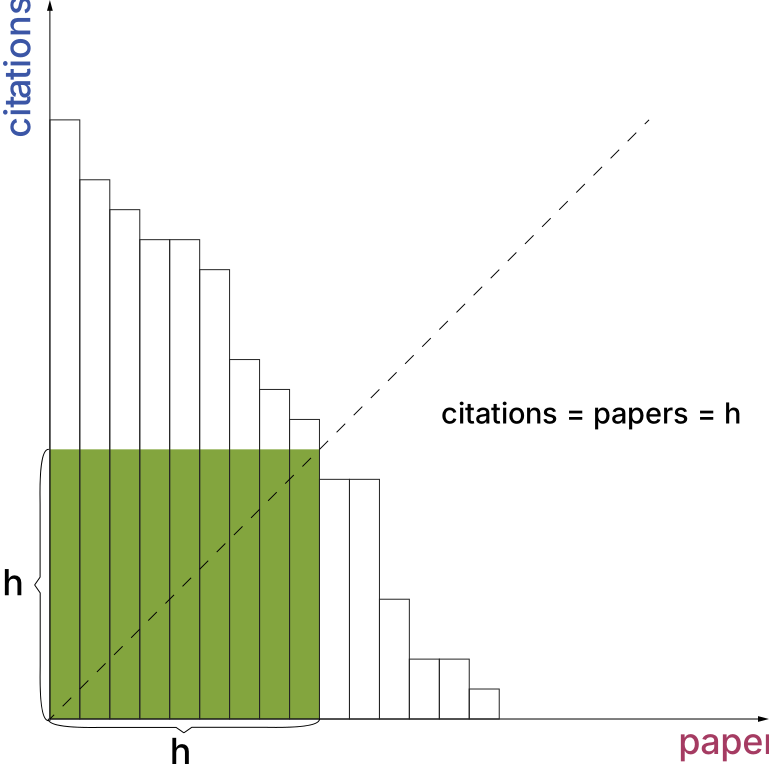
本题首先需理清H指数的概念,官方题解中的图片可以帮助理解此概念(个人感觉这个是本题最难的点,非常绕)。H指数即为图中直方图上最大正方形的边长h。
理解H指数的概念后,共有两种思路解决此问题。两种思路都是采用了先排序再遍历找到H指数的思想。
思路一
- 使用快速排序将
citations数组按从小到大的顺序进行排序。这里为了练习,自己实现了快排算法。 - 从引用次数较小的文章开始,依次递增文章序号
i,则此时当前遍历文章+剩余未被遍历的文章数remain_paper_num为paper_num - i。 - 当当前文章的引用次数
citations[i]大于等于remain_paper_num时,证明找到了H指数,H指数为remain_paper_num。
思路二
思路二比较巧妙,利用了如下特性来使用一种此种情况下更快的排序:计数排序。
如果一篇文章的引用次数超过论文的总数 n,那么将它的引用次数降低为 n 也不会改变 h 指数的值。
- 建立一个大小为论文总数+1的计数数组(因为引用次数为0也需要计数排序),并进行计数排序。
- 将引用次数从高至低进行遍历,找到H指数。
详见本题的官方题解。
代码
#include <vector>
#include <string>

using namespace std;

int Partition(vector<int> &a, int low, int high) {
    int pivot = a[low];
    while (low < high) {
        // 在基准的右边寻找小于等于基准的数,发现后交换至左边
        while (low < high && a[high] >= pivot) {
            --high;
        }
        a[low] = a[high];
        // 在基准的左边寻找比基准大的数,发现后交换至右边
        while (low < high && a[low] <= pivot) {
            ++low;
        }
        a[high] = a[low];
    }
    // 将基准置于i=j处
    a[low] = pivot;
    return low;
}

void QuickSort(vector<int> &a, int low, int high) {
    if (low < high) {
        int pivot_index = Partition(a, low, high);
        QuickSort(a, low, pivot_index - 1);
        QuickSort(a, pivot_index + 1, high);
    }
}

int min(int a, int b) {
    if (a > b)
        return b;
    else
        return a;
}

class Solution {
public:
    // 自己解法:快排+线性查找(与官方解法一相同)
    // 缺点是快排的空间复杂度为O(log n),
    // 而一般语言内置的是堆排序,空间复杂度为O(1)
    // 时间复杂度:O(nlog n),空间复杂度:O(1)
    int hIndex1(vector<int>& citations) {
        QuickSort(citations, 0, citations.size() - 1);

        int h_index{ 0 };
        int paper_num = citations.size();

        for (int i = 0; i < paper_num; ++i) {
            int at_least_cit_paper_num = paper_num - i;
            // 当前论文引用次数大于等于at_least_cit_paper_num,
            // 则证明有at_least_cit_paper_num篇论文至少被引用了at_least_cit_paper_num次
            if (citations[i] >= at_least_cit_paper_num) {
                // 由于已经排好序,因此新得出的h指数总是最大的
                // (at_least_cit_paper_num在不断减小)
                h_index = at_least_cit_paper_num;
                break;
            }
        }

        return h_index;
    }

    // 官方解法二:使用计数排序https://leetcode-cn.com/problems/h-index/solution/hzhi-shu-by-leetcode/
    // 时间复杂度:O(n),空间复杂度:O(n)
    int hIndex2(vector<int>& citations) {
        int paper_num = citations.size();
        // 创建一个大小为paper_num+1的计数数组
        // 大小为paper_num+1的原因是引用次数为n需要占用数组的第n个位置
        // 故需要0~n共n+1个位置
        vector<int> count;
        count.resize(paper_num + 1);  // 改变容器大小,默认用0填充。
        // 计数
        for (auto c : citations) {
            count[min(c, paper_num)]++;
        }

        // 倒着查找
        int citation_num{ paper_num };
        for (int at_least_cit_paper_num = count[paper_num];  // at_least_cit_paper_num
                                                             // 表示至少有citation_num次引用的论文数量
                citation_num > at_least_cit_paper_num;  // 当引用数小于等于at_least_cit_paper_num时终止
                at_least_cit_paper_num += count[citation_num]) {
            citation_num--;
        }

        return citation_num;
    }
};


int main() {
    Solution s;
    vector<int> input{ 1,2,2,2,4,4,4 };

    int output{ 0 };
    output = s.hIndex2(input);

    return output;
}